
KIDIWIE – AI-supported Data Innovation and Digital Twins for Spatial Energy Planning
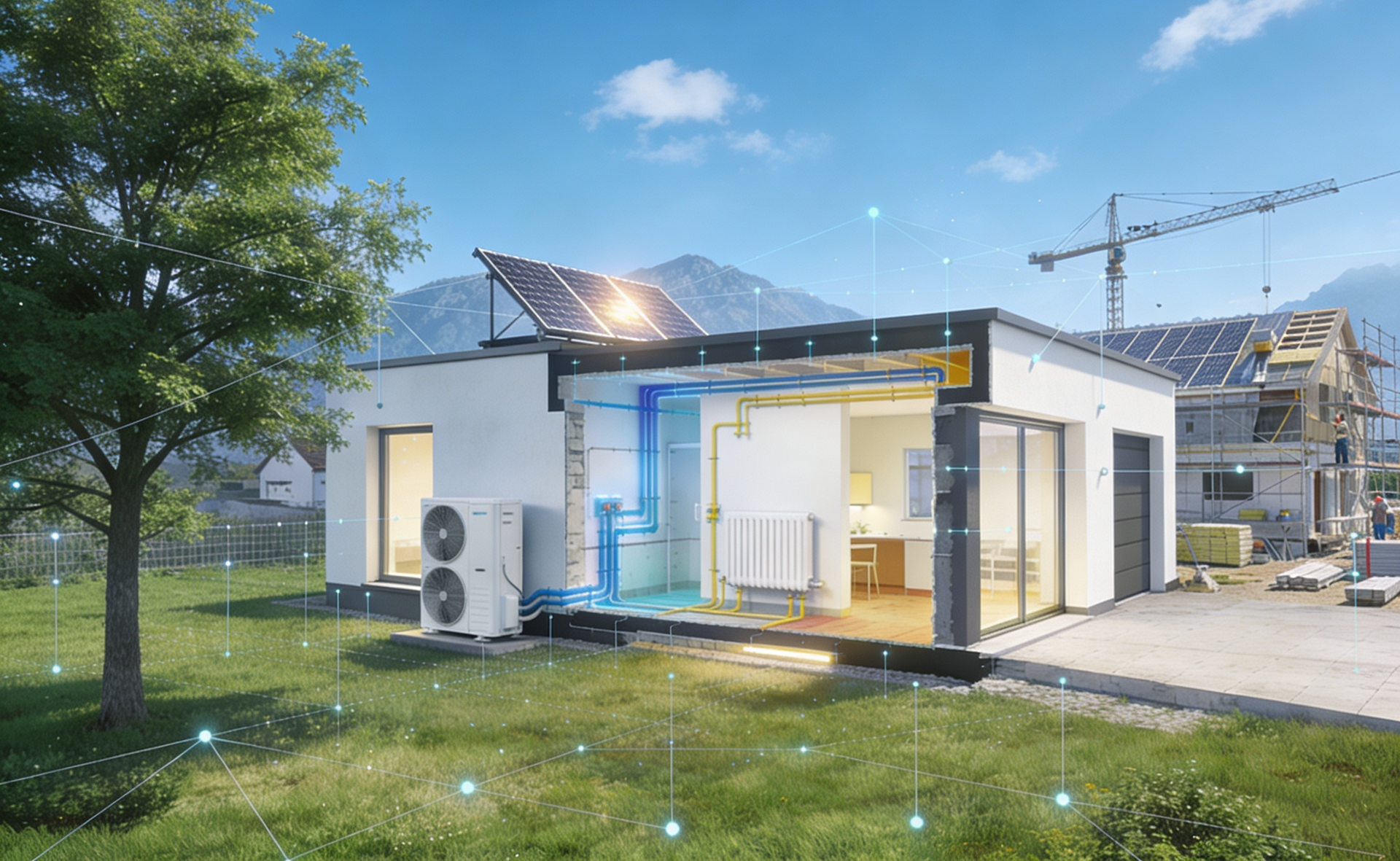
© iSPACE plus / AI
A successful energy transition requires accelerated innovation to support Austria’s path towards climate neutrality by 2040. Efficient and targeted use of renewable energy, as well as a holistic understanding of urban and regional energy systems, requires innovative approaches for the high-quality spatial representation of heat demand structures. Scalable solutions that can be applied nationwide are therefore an essential basis for spatial energy planning.
The KIDIWIE project aims to achieve a step change in innovation using AI-supported spatial data modelling and visualisation strategies in the context of a digital twin. Using innovative GeoAI methods and intelligent geodata analysis, the project develops approaches to close data gaps, improve data quality and consistency, and provide high-quality, area-wide building indicators. In addition, bottom-up approaches based on data available throughout Austria are designed, enriched with GeoAI methods and validated.
This information is crucial for assessing the current situation in municipalities and cities and for planning the long-term transition to renewable energy sources efficiently. Another key component of the project is the development of a digital twin for spatial energy planning. Innovative 3D visualisation strategies and concepts for spatial energy data are developed and evaluated in an accompanying user study.
As a result, KIDIWIE provides validated AI-supported solutions for generating GIS-based foundations for spatial energy planning, as well as interactive demonstrators for selected pilot regions. The project thus creates transferable methods that can potentially be applied across Austria and support the digital transformation of the energy sector.

DI Franz Mauthner, M.Sc.
Key activities:
Spatial Energy Planning and Regional Energy System Analysis
Customer
FFG – Österreichische Forschungsförderungsgesellschaft
Programm: Energieforschung, 2. Ausschreibung 2024