
Filter

Nutricoal – Process development for the manufacturing of a biobased fertilizer with regulated nutrient release
The objective is the process development for the manufacturing of a solid, storable and emission-free biological product from unused organic waste and residual material fractions of the food processing industry with soil improving properties that may be modified. The Nutricoal product is based on biochar, which is obtained by pyrolysis from organic waste from the meat-processing industry and of which the industry has difficulties in disposing so far. Depending on the desired product properties, specific functional chemical groups are generated on the coal surface by special activation measures.
To charge the coal with nutrients, anaerobically processed slaughter waste, i.e. fermentation residue, is concentrated using an innovative low-temperature process (membrane distillation) and used as a nutrient supplier. In addition to the concentrate, pure water is obtained, which can be used as process water. The membrane distillation process is being developed by AEE INTEC as a part of the project.
In the project, the entire process chain will be tested at individual pilot plants operated by the project partners, the results will be evaluated in the laboratory and used as a basis for simulations. At the end of the project, the product quality and the energy efficiency of the process should be assessed and the dimensions of a possible pilot plant should be determined.

SolarReaktor – Exploratory of process-oriented concept development of solar reactors and their application potentials
Based on a comprehensive survey of processes, process and reactor technologies of relevant industrial sectors suitable for solar energy supply , the SolarReaktor exploratory project is developing a radically innovative and re-designed solar reactor concept, identifyng the necessary research needs and evaluating its potential applications.
SolSPONGEhigh – High solar fraction due to thermally activated components in urban environments
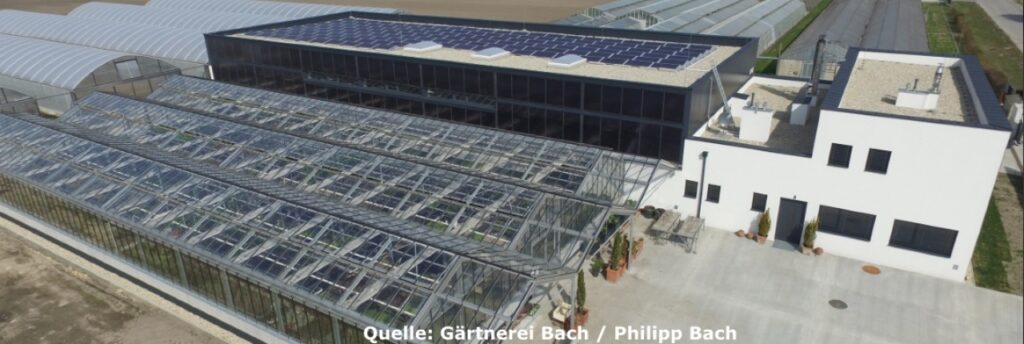
Thermally activated building components (TABS) have been used in buildings for quite some time, with underfloor heating being the most widespread application as near-surface activation in combination with low-temperature heating systems in residential buildings.

HPC (Heat Pumping Systems Control) – Model-based control of absorption heat pumping systems
In this project a new model-based control of absorption heat pumping systems with the working fluid ammonia / water and water / lithium bromide will be developed. The developed control system is going to be experimentally validated and verified with test runs based on practical requirements to identify the potential for improvements.

SmaCiSe – Smart City Sensing – Thermal Screening of Physical Objects and Air-quality at Urban Scale
The project aims at innovations concerning georeferenced urban data acquisition and innovative data processing for digital urban data analytics. Three dimensional microclimatic and air quality models will be created gained from measured surface temperatures and air quality data of different heights. For data acquisition dedicated detector instruments mounted on zeppelins, drones and UAVs will be used.
The project focuses on thermal environmental analysis and three dimensional small-scale data acquisition of air pollutant concentrations in Austria and China / Guandong.

EUREMnext – Taking European EnergyManagers to next efficiency levels by implementing energy audit recommendations – EUREMnext
The overall goal of the EU funded project „EUREMnext“ is to enrich the well-established EUREM European EnergyManager trainig program, making it available in new countries to allow more persons to become qualified/accredited experts or upgrade their knowledge and skills, and adding ancillary implementation support activities. Thereby contribute to increasing the quality of energy audit results, the probability of implementation of the recommendations, and ultimately the energy efficiency and competitiveness of the businesses.

Amstetten Smart City Life 2030 – FutureHub
Amstetten has a clear vision to use the district development in the vacated ÖBB railway station area as an opportunity for a big step towards Zero-Emission-City. A systemic approach to sustainable heating and cooling, including a low-temperature network with technical measures at building and neighbourhood level and initiatives to change mobility behaviour, should contribute to reducing the CO2 footprint in the medium term.

SCORES – Self-Consumption of Renewable Energy by Hybrid Storage Systems
SCORES will combine and optimize the multi-energy generation, storage and consumption of local renewable energy (electricity and heat) and grid supply, bringing new sources of flexibility to the grid, and enabling reliable operation with a positive business case in Europe’s building stock.

IEA IETS TCP Task 17 – Emerging membrane technologies for energy efficient separation of lignocellulosic biomass in biorefineries
The IEA IETS TCP Task 17 project “Membrane filtration for energy-efficient separation of lignocellulosic biomass components” pursued the overall goal of ensuring optimized use of lignocellulosic material in a biorefinery approach through energy- and cost-efficient separation technologies. The pulp and paper industry plays a special role in biorefineries due to the feedstock wood and the high volume of production. Since this industrial sector is also one of the most energy-intensive industries in Austria, a special focus was placed on it in the course of the project. The goal of the biorefinery is to achieve the highest possible added value in terms of cascading raw material utilization. Membrane separation processes combine the material use of the components through selective separation mechanisms with energy efficiency measures. Emerging membrane processes such as forward osmosis (FO), membrane distillation (MD), pervaporation (PV) and liquid membrane permeation (LMP) are of great interest.

© CREATOR: gd-jpeg v1.0 (using IJG JPEG v62), quality = 93
OptSmallGrids – Opimization of small district heating systems
Heating networks are considered to be one of the key technologies in regard to energy transformation because of facilitating smart connection of different renewable energy sources, waste heat, storages, heat consumers and coupling the networks to other energy supply networks such as power and gas to increase the overall efficiency, the economic performance and the reduction of CO2 emissions of future energy systems.