
IEA IETS Task 19: Electrification in the industry
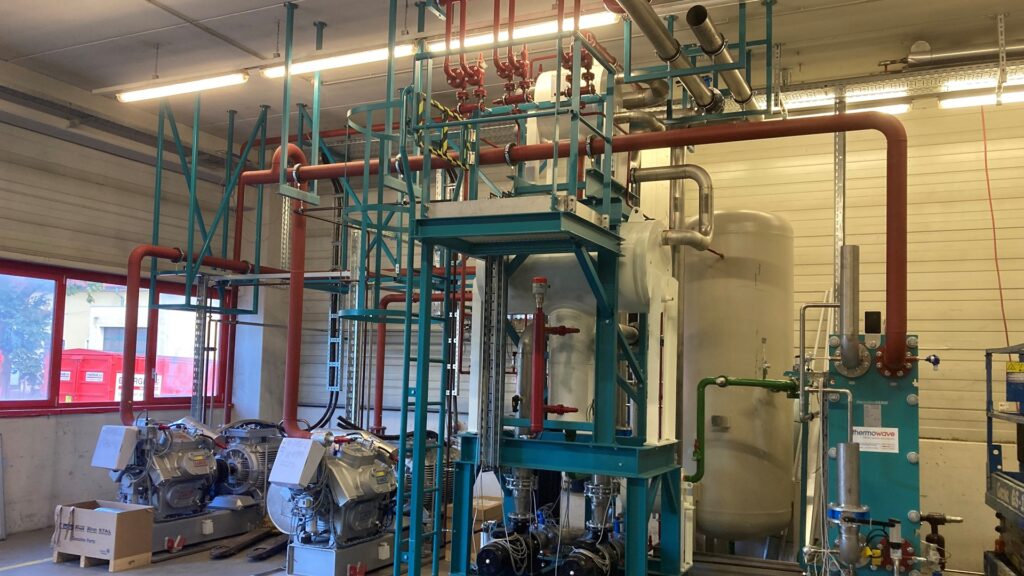
IEA IETS Task 19 deals with the electrification of industry by converting processes that were previously powered by fossil fuels. Electrification can lead to a significant reduction in greenhouse gas emissions if electricity from renewable energies is used. Research and industry are primarily concerned with grid-friendly electrification in order to consider and evaluate electricity generation, […]
IEA Task 4 CND – Climate Neutral Districts

The IEA Task 4 “Climate Neutral Districts” addresses the increasing urgency to decarbonize urban areas, with a specific focus on the district level. This scale represents a critical interface between buildings and city-wide systems, enabling integrated solutions in the fields of energy, mobility, and urban services. The project aims to develop practical, scientifically sound frameworks, […]
IEA EBC Annex 96 – Grid Integrated Control of Buildings

The ongoing energy transition requires buildings to become active components of future energy systems rather than mere consumers. With the growing share of renewable but fluctuating energy sources, demand-side flexibility is becoming increasingly important to ensure grid stability and efficiency. IEA EBC Annex 96 addresses how buildings can respond flexibly to energy supply and demand […]
RESET – 100% Renewable Energy Living Lab

The flagship project RESET – Renewable Energy Solutions for Efficiency and Transition is part of Austria’s Living Lab initiative and develops future-proof energy systems for rural areas. The focus lies on smart, sector-coupled energy solutions and efficiency measures, implemented through digital, data-driven, and socially inclusive methods. The goal is to create holistic and scalable approaches […]
INDUFLEX – Enabling industrial flexiblity through a modular DSM-Toolbox

Flexibility refers to the ability of systems to adjust their energy consumption or generation in response to the demands of the power grid. In times of volatile electricity production from renewable sources such as wind or solar, this capability is essential to balance supply and demand. According to the International Energy Agency, limited flexibility remains […]
CircularityOptimizer – URBAN MENUS Circularity China: Resilient Circularity Optimizer for Urban Systems

As part of the CircularityOptimizer project, AEE INTEC is developing an interactive technology catalog for designing resilient, circular urban systems. Based on the web-based planning tool URBAN MENUS developed by BUSarchitektur, symbiotic green technologies and resilient urban scenarios are modeled and integrated. The goal is to develop a master plan for productive cities and districts […]
HeatITup – Digital twin for cost-optimized operation of solar thermal plants

Solar thermal plants for district heating and industrial applications (>100 m² collector area) are a rapidly growing technology for providing cost-effective and price-stable renewable heat. They are considered a key technology for the heat transition and also generate significant local economic benefits.However, the rapid development of digital technologies has so far remained largely untapped in […]
NUCLEUS – Sustainable Urban Clusters for Climate-Neutral, Efficient, and Eco-Friendly Urban Development

The research project NUCLEUS investigates how Positive Energy Districts (PEDs) can be established as integral components of a future-proof urban energy system. PEDs are urban districts that generate more renewable energy than they consume and can significantly enhance energy efficiency in cities through the cross-sectoral exchange of electricity, heat, and cooling. Until now, such concepts […]
Rammed earth walls as energy storage – sustainability rethought

The construction industry is facing major challenges: Scarcity of resources, high energy requirements and rising greenhouse gas emissions. At the same time, the building sector offers enormous potential for ecological and social improvements. The RE-FORM earth project is therefore testing new approaches to sustainable construction – with a focus on regionally available, recyclable building materials […]
AnergieLeichtGemacht – Development of scalable implementation models for geothermal anergy networks to decarbonize the building sector

To achieve climate neutrality by 2040, new solutions for heat supply in the building sector are essential—especially in existing urban areas not connected to conventional district heating networks. Low-temperature anergy networks, which utilize renewable energy sources for both heating and cooling, offer significant but largely untapped potential. The project AnergieLeichtGemacht develops scalable technical, economic, and […]