
RESET – 100% Renewable Energy Living Lab
© BEST
The flagship project RESET – Renewable Energy Solutions for Efficiency and Transition is part of Austria’s Living Lab initiative and develops future-proof energy systems for rural areas. The focus lies on smart, sector-coupled energy solutions and efficiency measures, implemented through digital, data-driven, and socially inclusive methods. The goal is to create holistic and scalable approaches to support the ecological, economic, and social aspects of the energy transition.
RESET examines 85 municipalities in Lower Austria, characterized by dispersed settlement structures, individual energy demand, and existing district heating networks. This regional diversity requires flexible, decentralized solutions with strong public engagement.
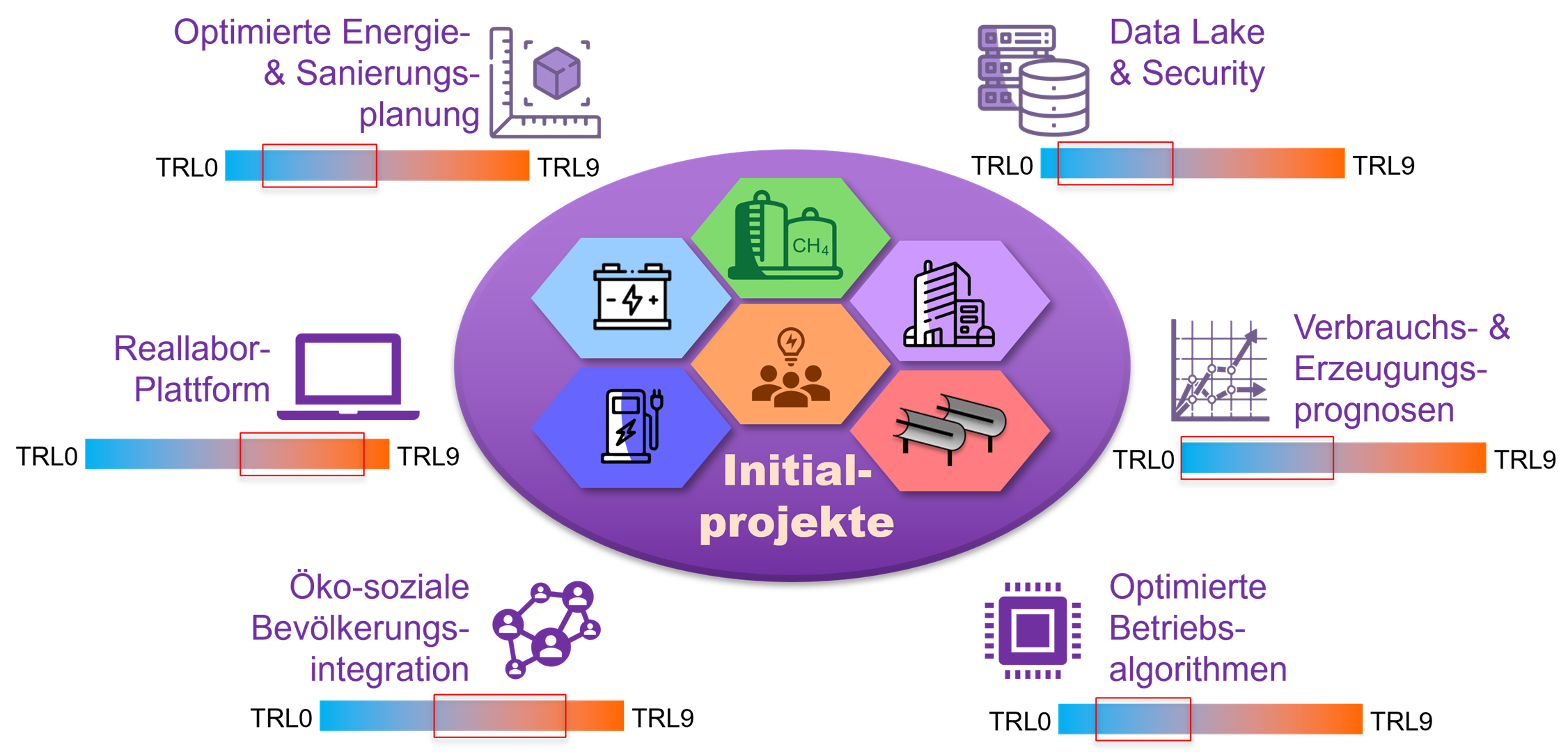
The project’s core is an optimized methodology for planning and operating renewable energy systems. Implementation focuses on five main areas:
- Data Lake & Security: Development of a secure, interoperable data infrastructure for energy planning and system operation
- Eco-social integration: Targeted communication strategies and involvement of local communities, including household energy profiling
- Optimized energy & renovation planning: Enhancement of planning tools for renewable systems and building efficiency measures
- Advanced control algorithms: Implementation of smart operation strategies, including demand and generation forecasting
- RESET platform: A web-based platform offering access to planning tools, information, and participation opportunities for municipalities, citizens, and businesses
All solutions are tested in real-world demonstration sites and transferred into practice through the innovation cooperative RESET.GO eGen. The developed methods are scalable and designed to accelerate the energy transition in similar rural regions across Austria.

Customer
Die Initiative 100% Erneuerbare Energie Reallabore wurde vom Bundesministerium für Innovation, Mobilität und Infrastruktur initiiert und wird gemeinsam mit der österreichischen Forschungs- Förderungsagentur und dem Klima- und Energiefonds gefördert.
Project coordination
Project partner
- AEE – Institut für nachhaltige Technologien
- autonomize GmbH
- ee-volution
- eKUT GmbH
- energyfamily GmbH
- FH St. Pölten – Department Informatik und Security
- FH Wiener Neustadt – Campus Wieselburg
- Ing. Aigner Wasser – Wärme – Umwelt GmbH
- Kompost und Biogas Verband Österreich, kurz: KBVÖ
- oekostrom AG energy group
- Reisenbauer Solutions GmbH
- Scheiber Solutions GmbH