
CRAVEzero – Cost Reduction and market Acceleration for Viable nearly zero-Energy buildings

CRAVEzero will focus on proven and new approaches to reduce the costs of Nearly Zero Energy Buildings (nZEBs) at all stages of the life cycle. The main goal is to identify and eliminate the extra costs for nZEBs related to processes, technologies, building operation, and to promote innovative business models taking into account the cost-effectiveness […]
Oscyme – Enhancement of enzymatic hydrolysis by a new reactor-design as milestone for value added processing of ligno-cellulosic residues

Lignocellulosic waste (agricultural, forest residue and food waste etc.) is abundant and considered an important source for producing high-value chemicals and commodities. The conversion of ligno-cellulosic materials is on the one hand important to provide energy alternatives from waste streams to fossil fuels and to sustainably produce chemicals from renewable feedstocks. On the other hand, […]
T2LowEx – Transformation of conventional heating grids towards low temperature heating grids by heat customer related optimisation measures

District heating currently supplies more than 20% of the Austrian delivered energy for space heating and domestic hot water purposes. This share has increased significantly within the past 10-15 years and it is expected that this trend will continue in the coming years. However it is assumed that expansions of district heat supply in Austria […]
ÖKO-OPT-QUART – Ökonomisch optimiertes Regelungs- und Betriebsverhalten komplexer Energieverbünde zukünftiger Stadtquartiere
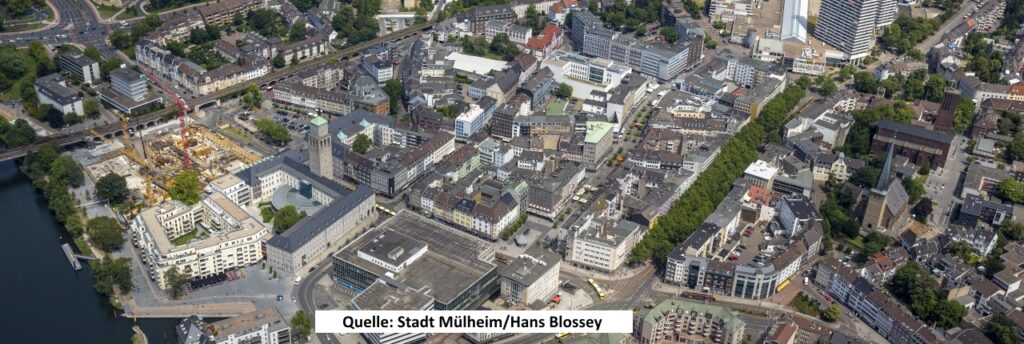
Starting point / motivation The development of energy-efficient buildings and the massive proliferation of renewable energy production has ushered in a transformation of our urban energy networks. Their complexity has increased dramatically due to the dependency of renewable energy production on non-controllable and ever-changing phenomena such as wind speed and sun intensity, the increasingly decentralized […]
IEA-IETS Annex 15: Industrial Excess heat Recover (Phase 2)

Progress in the development and integration of energy-relevant technologies is of great importance for reaching collective targets such as energy security, environmental protection and economic and social developments. The optimum use and integration of industrial waste heat is a key technology. The participation of the Austria research institutes AEE INTEC, AIT Austrian Institute of Technology […]
Digital building models for sustainable buildings
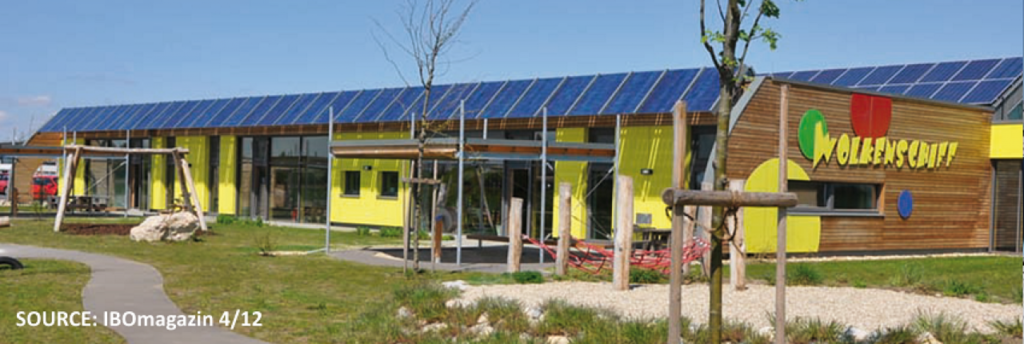
With the application of BIM (Building Information Modeling), which describes a smart process for the design, planning, construction and operation of buildings and infrastructural facilities, it should be possible to detect problematic developments in the construction process at a very early stage and to adjust the following decisions accordingly. This is achieved by a model […]
ParaSol – Hydraulic Design of collector modules in Large Solar Thermal Plants
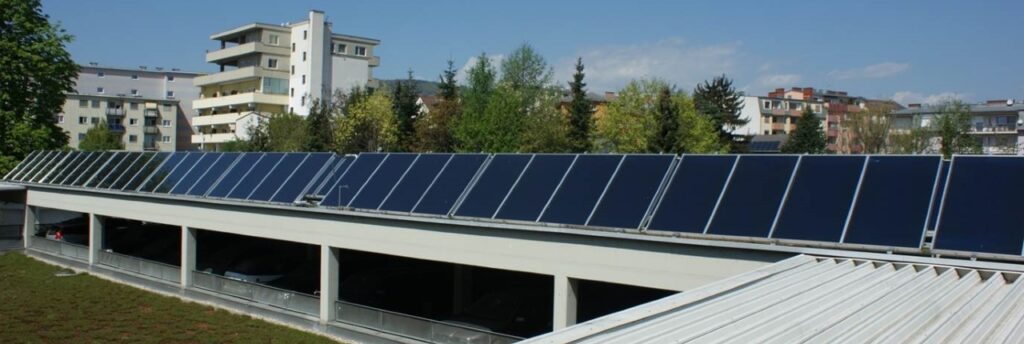
State of the art: Large solar thermal systems for different applications are gaining importance for the sustainable generation of heat, both on Austrian and international levels. The Austrian solar industry is aware of this development and plays a key role in the segment of plants with >500 m² of collector area. Numerous large installations with […]
IEA EBC Annex 70 – Building Energy Epidemiology – Analysis of real building energy use at scale

The shift to a low carbon built environment will require both a step change in the energy performance of buildings alongside more efficient provision of energy services, and a massive decarbonisation of the energy used. By introducing a new approach which seeks to describe the drivers of the demand for energy, its sources and fuels, […]
E.Vent – Efficient, affordable and maintenance-friendly centralized mechanical ventilation systems for multifamily buildings – planning, operation and fire protection

Previous and ongoing projects investigating ventilation concepts for energy efficient construction and refurbishment (e.g. low_vent.com, SINFONIA) have shown that more research is needed to optimize cost efficient realization and operation of centralized ventilation systems. Indeed, because of the increased complexity and costs due to required fire protection measures (e.g. the installation and periodic maintenance of […]
Renewables4Industry
By the integration of renewable energy carriers in the supply of industrial production processes, a significant contribution to the reduction of fossil CO2-emissions can be achieved. Therefore, the industrial key processes themselves have to be designed for the volatility / fluctuation of the energy supply or resp. have to be able to react on volatility […]